
What is the Trapezoidal Tear Test?
Trapezoidal tear strength refers to the ability of a material to resist tearing when a force is applied along a specific path, marked in the shape of a trapezoid. This test measures the force required to propagate a tear along the marked trapezoidal area of a specimen, simulating the material’s performance under stress in real-world conditions. The trapezoidal shape ensures that the material tears in a controlled and predictable manner, providing valuable data on its résistance à la déchirure et durability.
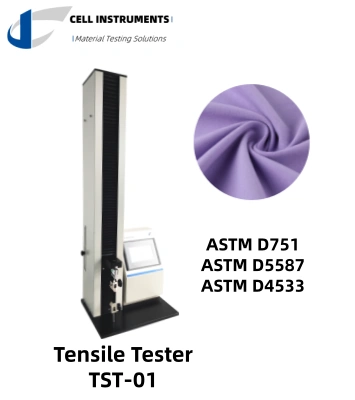
Trapezoidal Tear Test Equipment
A tensile testing machine is the core equipment used for conducting the trapezoidal tear test. This machine applies a controlled force to the test specimen, which has a trapezoidal cut at its center, until the material tears. The machine records the force required to propagate the tear, providing crucial data on the material’s résistance à la déchirure.
Key Features:
- Load Cell: Measures the force applied to the specimen during testing.
- Variable Speed Control: Ensures precise control over the rate of extension to match standard testing conditions (typically 5.00 ± 0.2 mm/s).
- Graphing or Digital Display: For visual representation of force vs. elongation or force vs. displacement data.
- Accurate Clamp Design: The machine should have robust, adjustable clamps to securely hold the trapezoidal specimen during the test.
Key Benefits of the Trapezoidal Tear Test
Le trapezoidal tear test provides valuable insights into the material’s résistance à la déchirure et durability, which are crucial for predicting how these materials will perform under stress or after extended use. The test is widely used for geotextiles, fabrics, and films plastiques, where resistance to tearing directly impacts the material’s effectiveness in real-world applications.
Some of the key benefits of the test include:
- Predicting Material Performance: By simulating tear propagation, the test helps manufacturers predict how materials will behave when subjected to physical stress, wear, and aging.
- Standardized Testing: The ASTM standards ensure consistency and accuracy in the results, making it easier to compare materials from different manufacturers or batches.
- Quality Control: The test helps identify potential weaknesses in materials, ensuring that products meet the required specifications and are suitable for their intended applications.
Standards and Testing Methods
The trapezoidal tear strength test is guided by several standards to ensure consistent, reliable results across laboratories and industries. These include:
- ASTM D751: This standard is used for measuring the tear strength of fabrics, including those used for geotextiles and coated textiles. It is crucial for assessing materials used in packaging and industrial applications.
- ASTM D5587: Applied primarily for geotextiles, this standard addresses the unique structure of these materials. It uses the trapezoidal tear test to measure their performance in civil engineering, filtration, and reinforcement applications.
- ASTM D4533: Similar to ASTM D5587 but with a broader focus, ASTM D4533 applies to woven and nonwoven geotextiles It’s vital for understanding the materials’ ability to withstand physical stress and tearing.