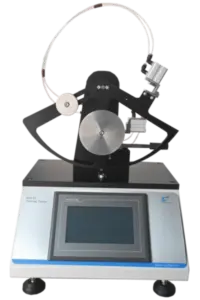
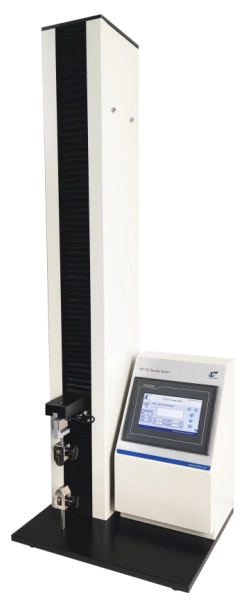
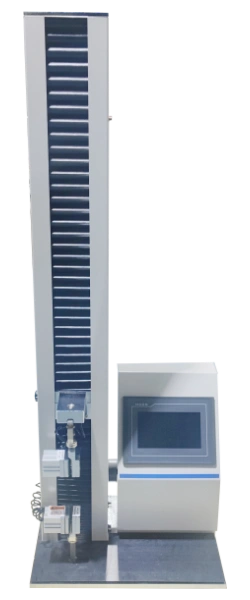
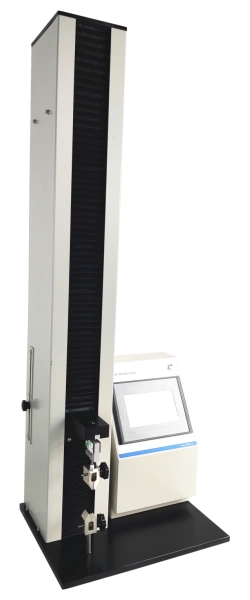
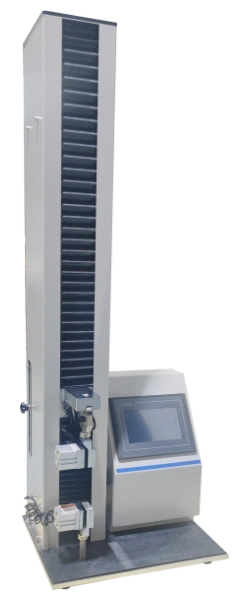
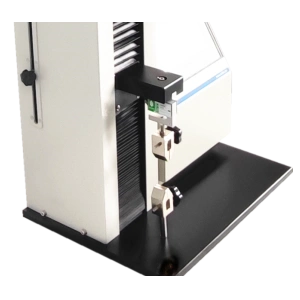
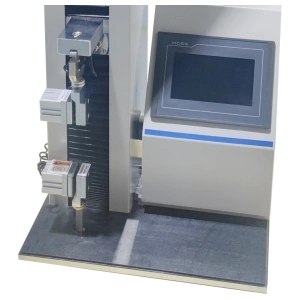
Penguji air mata memainkan peran penting dalam mengevaluasi perilaku material saat mengalami retakan yang merambat. Dalam pengemasan, perangkat medis, tekstil, dan film industri, kinerja sobek secara langsung memengaruhi integritas produk, keselamatan konsumen, dan kepatuhan terhadap peraturan. Cell Instruments merancang solusi pengujian sobek canggih yang menggabungkan presisi mekanis, kontrol digital, dan kompatibilitas standar internasional untuk menghasilkan data kekuatan sobek yang andal untuk laboratorium kontrol kualitas dan departemen R&D.
Tidak seperti pengukuran tarik sederhana, analisis sobek berfokus pada inisiasi dan perambatan retak, memberikan wawasan yang lebih dalam tentang daya tahan material. Baik Anda perlu mengevaluasi film kemasan fleksibel, kertas karton berlapis, lembaran karet, atau kain tenun, penguji sobek yang dikonfigurasi dengan benar akan memastikan hasil yang dapat diulang dan sesuai standar.
Penguji Air Mata untuk Evaluasi Material yang Andal
Penguji sobek mengukur gaya yang diperlukan untuk terus merobek spesimen yang telah dipotong sebelumnya dalam kondisi yang terkendali. Insinyur sering menggunakan data ini untuk memprediksi kegagalan pengemasan, pecahnya segel, atau kerusakan kain selama penanganan.
Cell Instruments terintegrasi:
- Kontrol berbasis PLC dengan layar sentuh HMI 7″
- Sekrup timah bola presisi untuk perpindahan yang stabil
- Kecepatan yang dapat disesuaikan dari 1-500 mm/menit
- Akurasi hingga skala penuh 0,5%
- Akurasi perpindahan ± 0,01 mm
- Beberapa opsi sel beban (50 N hingga 1 kN)
Fitur-fitur ini memungkinkan operator untuk mengonfigurasi penguji sobek secara tepat sesuai dengan jenis bahan dan standar yang berlaku.
Penguji Sobek untuk Uji Sobek Kuburan
Uji sobekan kuburan, didefinisikan dalam ASTM D624, mengevaluasi ketahanan sobek karet vulkanisir dan elastomer menggunakan spesimen potong. Penguji sobek yang dikonfigurasikan untuk metode ini menerapkan gaya tarik ke spesimen yang sobek, mengukur gaya puncak selama perambatan sobekan.
Metode ini membantu produsen seal, gasket, dan komponen fleksibel menentukan ketahanan terhadap pertumbuhan retak di bawah tekanan. Penyelarasan genggaman yang akurat dan kontrol kecepatan secara signifikan memengaruhi pengulangan pengujian.
Penguji Sobek untuk Uji Sobek Trapesium
Uji sobekan trapesium, direferensikan dalam ASTM D4533, mengukur ketahanan sobek pada kain dan bukan tenunan. Geometri spesimen menciptakan konsentrasi tegangan yang memulai sobekan terkendali.
Tim kontrol kualitas di industri tekstil dan geotekstil mengandalkan metode ini untuk membandingkan daya tahan kain. Penguji sobekan yang dikalibrasi dengan benar memastikan tingkat pemuatan yang stabil dan jalur sobekan yang konsisten.
Uji Air Mata Lidah Menurut ISO dan ASTM
Tes sobekan lidah, tercakup dalam ISO 13937-2 dan ASTM D2261, mengukur gaya yang diperlukan untuk merambatkan potongan pada bahan tekstil.
Metode ini mensimulasikan kondisi sobekan dalam kehidupan nyata pada garmen, kain industri, dan kantung udara. Operator menyiapkan spesimen persegi panjang dengan potongan tengah, menjepit kedua kaki, dan menerapkan gaya tarik hingga sobekan maju. Penguji sobek mencatat nilai gaya puncak dan rata-rata untuk pelaporan.
Uji Sobek Celana dan Uji Sobek Tunggal untuk Film Plastik
Uji sobek celana dan uji sobek tunggal mengevaluasi bahan plastik fleksibel dan lembaran tipis. Standar seperti ISO 6383-1 dan ASTM D1938 menentukan geometri spesimen dan kecepatan pengujian.
Untuk produsen kemasan fleksibel, kekuatan sobek film plastik secara langsung memengaruhi kemampuan membuka dan daya tahan mekanis. Ketahanan sobek yang seimbang memastikan bahwa konsumen dapat membuka kemasan dengan mudah tanpa pecah tanpa disengaja selama pengangkutan.
Uji Ketahanan Sobek pada Kertas dan Papan
Uji ketahanan sobek pada kertas menentukan bagaimana kertas karton, bahan bergelombang, dan kertas khusus menahan perambatan sobekan. Meskipun metode pendulum Elmendorf adalah metode yang umum, namun konfigurasi penguji sobek tipe tarik mendukung metode khusus dan aplikasi penelitian.
Standar seperti ASTM D1004 dan ASTM D5587 lebih jauh memperluas penerapan pada film dan substrat berlapis.
Bagi para insinyur pengemasan, memahami kinerja sobekan membantu mengoptimalkan orientasi serat, formulasi pelapisan, dan struktur laminasi.
Uji Sobek pada Kain dan Bahan yang Dilapisi
Uji sobek pada kain juga berlaku untuk tekstil berlapis dan komposit industri di bawah ini ASTM D751. Bahan-bahan ini sering digunakan dalam struktur tiup, terpal, dan penutup pelindung. Ketahanan sobek secara langsung memengaruhi masa pakai dan kinerja keselamatan.
Penguji sobek serbaguna dengan pegangan yang dapat dipertukarkan mendukung pergantian perlengkapan yang cepat antara mode tarik, kupas, dan sobek, sehingga meningkatkan efisiensi laboratorium.
Cara Kerja Penguji Air Mata
Proses pengujian tipikal meliputi:
- Mempersiapkan spesimen sesuai dengan standar yang dipilih
- Memperkenalkan pra-potong atau takik yang ditentukan
- Menjepit spesimen dengan aman
- Mengatur kecepatan uji dan parameter sel beban
- Memulai pengujian melalui antarmuka layar sentuh
- Merekam gaya puncak, gaya rata-rata, dan perilaku perambatan sobekan
Sistem secara otomatis kembali ke posisi awal setelah selesai. Operator dapat mengekspor hasil melalui RS-232 atau microprinter opsional untuk dokumentasi.
Hasil keluaran biasanya meliputi:
- Kekuatan sobek maksimum (N)
- Kekuatan perambatan air mata
- Pemanjangan saat robek
- Kurva perpindahan beban
Metrik ini mendukung perbandingan produk, pengembangan material, dan verifikasi kepatuhan.
Mengapa Memilih Penguji Air Mata Cell Instruments
Cell Instruments memadukan stabilitas mekanis dengan kecerdasan digital:
- Rangka kelas industri untuk keandalan jangka panjang
- Program uji bawaan untuk patah, perpanjangan, pengelupasan, dan sobek
- Stroke yang dapat disesuaikan hingga 800 mm
- Kemampuan beradaptasi multi-industri
Tim teknisi kami juga menyediakan perlengkapan khusus dan peningkatan otomatisasi yang disesuaikan dengan konfigurasi uji sobek khusus.