
Introduction to ASTM D5587 and Fabric Tear Strength Testing
The ASTM D5587 standard provides guidelines for measuring the tear strength of fabrics using the trapezoidal tear strength test. This method is widely used to assess the durability of textiles, including woven, knitted, and coated fabrics, under controlled conditions. The test helps in evaluating the resistance of fabrics to tearing forces, which is crucial for industries like apparel manufacturing, automotive (airbag fabrics), and home textiles.
In this article, we will explore the fabric tear strength standard, focusing on the trapezoidal tear test, fabric tensile strength, and the importance of tear strength in fabric performance.
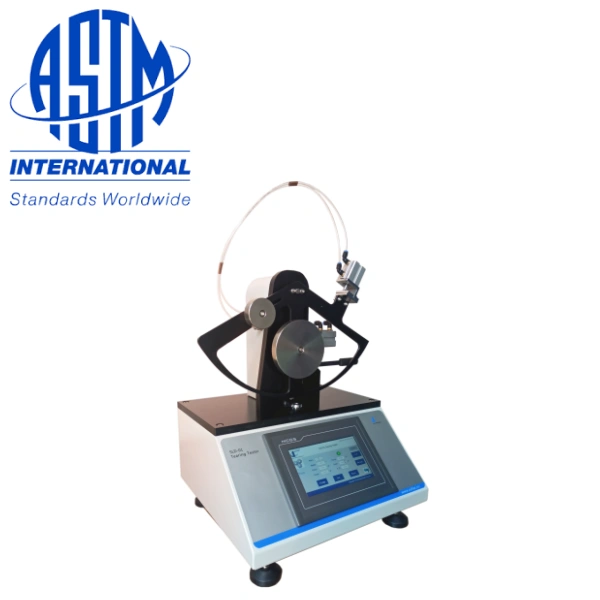
What is ASTM D5587?
ASTM D5587 is a standard test method for measuring the tear strength of fabrics, particularly useful for evaluating materials used in manufacturing durable goods. The test uses a constant-rate-of-extension (CRE) tensile testing machine, which ensures precise and repeatable results. The trapezoidal tear strength test measures the force required to propagate a tear across the fabric when subjected to a controlled pulling force.
The procedure involves preparing a trapezoidal-shaped specimen of fabric, which is then subjected to tension until the tear propagates. This method is ideal for evaluating how fabrics behave under stress and helps manufacturers select materials that will withstand wear and tear during normal usage.
Fabric Tear Strength Standard: The Trapezoidal Tear Test
The fabric tear strength standard is based on the trapezoidal tear strength test, a reliable method for testing fabrics’ resistance to tearing forces. This test involves two key components: single-peak force and the average of the five highest peak forces.
How the Trapezoidal Tear Test Works:
- Specimen Preparation: A trapezoidal sample of fabric is cut and conditioned according to the ASTM D5587 standard.
- Tear Initiation: A small tear is initiated before the specimen is placed in the testing machine.
- Test Procedure: The fabric is then subjected to a controlled tension until the tear propagates. The tear strength is measured by the force required to keep the tear advancing.
- Measurement: The test measures the force required to propagate the tear, and the resulting values are used to calculate the fabric’s tear strength.
The test can be performed in both dry and wet conditions, allowing manufacturers to assess fabric performance in different environments. This is particularly useful for materials that will be exposed to moisture or high humidity.
Key Factors in Fabric Tear Strength: Tensile Strength and Elongation
While the trapezoidal tear strength test measures the force required to propagate a tear, it is also important to consider other fabric properties like tensile strength and elongation. These properties are closely related to tear strength and give a broader understanding of how fabrics behave under stress.
Fabric Tensile Strength:
Tensile strength refers to the maximum force a fabric can withstand before it breaks. This is typically measured using a tensile testing machine, which records the force required to stretch the fabric until failure. Tensile strength is an important parameter for assessing how well a fabric can resist pulling forces during everyday use.
Elongation:
Elongation refers to how much a fabric can stretch before breaking. A fabric with high elongation can stretch significantly without tearing, which is crucial for materials used in applications like sportswear or automotive airbags, where flexibility is key.
ASTM D5587 Applications and Importance in the Industry
ASTM D5587 is critical in industries where fabric durability is essential. Here are a few key applications:
- Apparel Manufacturing: The test helps evaluate fabrics used in clothing, ensuring they can withstand daily wear and tear.
- Automotive Industry: Materials such as airbag fabrics are tested for tear strength to ensure they perform under extreme conditions.
- Home Textiles: Fabrics used in household items like blankets, curtains, and upholstery are tested to ensure they maintain their integrity over time.
The trapezoidal tear strength test is also important for quality control, as it allows manufacturers to compare different fabrics and select the best material for specific applications. This ensures that only high-performance fabrics are used in the production of goods that will face mechanical stresses during their lifecycle.
How the Tear Tester Helps in ASTM D5587 Compliance
To ensure that ASTM D5587 is followed accurately, the use of a tear tester is essential. Cell Instruments’ tear testers are designed to provide precise and reliable measurements for tear strength testing, including the trapezoidal tear test. Our testers are fully compliant with ASTM D5587, providing repeatable results that meet industry standards.
Using a tear tester, manufacturers can conduct tests on a wide range of fabrics, ensuring that the material will perform as expected in real-world applications. Our tear testing equipment is user-friendly, easy to calibrate, and delivers accurate results to help you meet the highest standards.