
Material durability is a critical quality attribute for flexible packaging, plastic films, paper products, medical packaging, and industrial materials. A Tear Tester is an essential laboratory instrument used to evaluate a material’s ability to resist the propagation of an existing tear. By measuring tear strength, manufacturers can predict product performance during handling, transportation, converting, and end-use applications.
For organizations producing films, laminates, paper, and flexible packaging materials, conducting a standardized tear resistance test helps ensure product consistency, optimize material selection, and reduce the risk of failure in real-world conditions. Among the most widely recognized standards for this purpose is ASTM D1922, which specifies the Elmendorf pendulum method for determining the tearing resistance of plastic film and thin sheeting.
Why Tear Resistance Matters
Many flexible materials encounter stresses that can initiate small cuts, punctures, or notches during manufacturing and use. Once a tear begins, the material’s ability to resist further propagation becomes critical.
A material with insufficient tear resistance may experience:
- Package failure during transportation
- Product leakage
- Reduced shelf-life protection
- Converting and processing issues
- Customer complaints and product returns
Conversely, materials with appropriate tear resistance provide:
- Improved durability
- Enhanced puncture tolerance
- Better handling performance
- Increased packaging reliability
- Greater product protection
This is why tear resistance testing remains a fundamental part of quality control and product development programs.
What Is a Tear Tester?
A Tear Tester is a specialized instrument designed to measure the force required to continue tearing a pre-cut specimen through a specified distance.
The most common design is the Elmendorf Tear Tester, which uses a pendulum mechanism to determine the energy absorbed during tear propagation.
The instrument provides a quantitative measurement known as Elmendorf tear strength, which reflects the material’s resistance to tearing once a tear has been initiated.
Understanding ASTM D1922
What Is ASTM D1922?
ASTM D1922 is the standard test method for determining the propagation tear resistance of plastic film and thin sheeting using the pendulum-type Elmendorf apparatus.
The standard is widely used throughout:
- Flexible packaging manufacturing
- Plastic film production
- Medical packaging development
- Industrial materials testing
- Research laboratories
- Quality assurance departments
Purpose of ASTM D1922 Testing
The objective of ASTM D1922 is to measure the energy required to propagate an existing tear through a specified length of material.
The resulting data helps manufacturers:
- Compare material grades
- Evaluate film structures
- Monitor production consistency
- Verify customer specifications
- Support material development projects
How the Elmendorf Tear Strength Test Works
The tear resistance test conducted under ASTM D1922 utilizes a pendulum-based system that measures the work performed during tear propagation.
Testing Principle
The procedure follows these basic steps:
- A specimen is prepared with a defined slit or notch.
- The specimen is clamped into the instrument.
- A pendulum is released from a fixed height.
- The pendulum propagates the tear through the specimen.
- The energy absorbed during tearing is measured.
- The instrument calculates tear resistance.
The greater the energy required, the higher the material’s tear resistance.
Why the Elmendorf Method Is Effective
The Elmendorf method simulates rapid tear propagation conditions that often occur in practical applications.
This makes it particularly useful for evaluating:
- Packaging durability
- Film handling performance
- Material toughness
- Product reliability
Tear Resistance for Plastic Film
Importance of Tear Resistance for Plastic Film
The evaluation of tear resistance for plastic film is essential because films frequently encounter stresses during:
- Roll unwinding
- Printing
- Laminating
- Slitting
- Packaging operations
- Transportation
Even a small nick or puncture can develop into a larger tear if the material lacks sufficient tear resistance.
Common Film Materials Tested
A Tear Tester is frequently used to evaluate:
- LDPE films
- LLDPE films
- HDPE films
- BOPP films
- CPP films
- PET films
- Nylon films
- Multilayer barrier films
- Stretch films
- Shrink films
Results help manufacturers optimize formulations and film structures for specific applications.
The Elmendorf Tear Tester in Quality Control
The Elmendorf Tear Tester remains one of the most widely used instruments for tear testing due to its simplicity, repeatability, and industry acceptance.
Advantages of the Elmendorf Method
- Rapid testing procedure
- High repeatability
- Standardized methodology
- Suitable for thin materials
- Widely recognized internationally
Routine testing allows quality control personnel to identify process variations before products reach customers.
Typical Tear Test Procedure
Specimen Preparation
Proper sample preparation is critical for obtaining reliable results.
Best practices include:
- Conditioning specimens before testing
- Maintaining specified dimensions
- Using sharp cutting tools
- Avoiding damaged areas
Test Execution
A standard test sequence includes:
- Prepare test specimens according to ASTM D1922.
- Introduce the required slit.
- Clamp the specimen securely.
- Select the appropriate pendulum capacity.
- Release the pendulum.
- Record tear resistance values.
- Repeat for multiple specimens.
- Calculate average results.
Modern digital systems often automate result collection and reporting.
Understanding Test Results
What Is Elmendorf Tear Strength?
Elmendorf tear strength represents the energy required to continue tearing a material after a tear has started.
Higher values generally indicate:
- Greater tear resistance
- Improved durability
- Better handling performance
- Enhanced puncture tolerance
Lower values may indicate:
- Brittle material behavior
- Structural weaknesses
- Reduced resistance to damage
Example Interpretation
| Tear Strength Result | General Interpretation |
|---|---|
| Low | Easy tear propagation |
| Moderate | Balanced performance |
| High | Strong tear resistance |
| Very High | Excellent durability |
Actual acceptance criteria depend on the material type and intended application.
Applications Across Industries
Flexible Packaging
Tear testing is widely used for:
- Food packaging films
- Industrial packaging films
- Retail packaging
- Shrink packaging
Medical and Pharmaceutical Packaging
Manufacturers evaluate tear properties to balance:
- Package durability
- Ease of opening
- Product protection
Paper and Paperboard
Although ASTM D1922 focuses on plastic film, similar tear testing methods are used for:
- Packaging paper
- Labels
- Cartons
- Specialty papers
Research and Development
R&D laboratories use tear testing to:
- Compare resin formulations
- Optimize multilayer structures
- Evaluate additives
- Improve material performance
Comparing Tear Testing Standards
Several standards are available for evaluating tear properties.
| Standard | Application |
|---|---|
| ASTM D1922 | Plastic film and thin sheeting |
| ASTM D1004 | Initial tear resistance of plastic film |
| ISO 6383-2 | Elmendorf tear resistance of plastic films |
| TAPPI T414 | Internal tearing resistance of paper |
| ISO 1974 | Paper tearing resistance |
Selecting the correct standard depends on the material type and customer requirements.
Selecting the Right Tear Tester
When choosing a Tear Tester, laboratories should evaluate:
- ASTM D1922 compliance
- ISO 6383 compatibility
- Measurement accuracy
- Pendulum capacity range
- Digital data acquisition
- Ease of calibration
- Safety features
- Software and reporting capabilities
A properly configured system ensures reliable results across a wide range of materials.
Cell Instruments Tear Tester Solutions
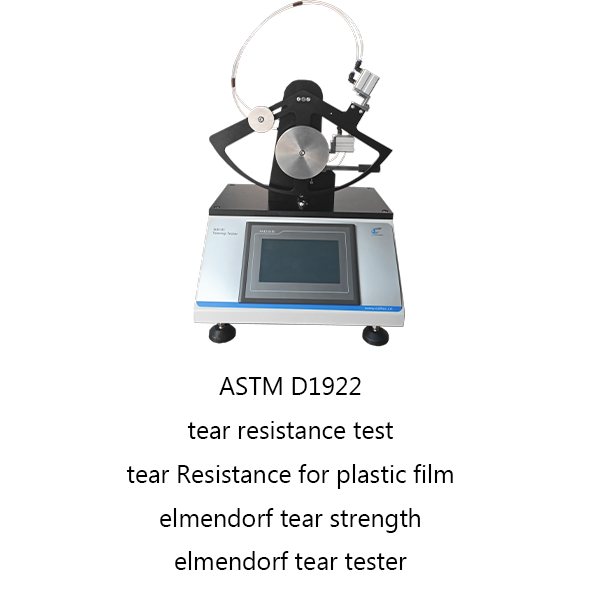
Cell Instruments provides advanced Tear Tester solutions designed for plastic films, flexible packaging materials, laminates, and other thin-sheet products. These systems support testing according to ASTM D1922, ISO 6383, and related tear testing standards.
In addition to standard instruments, Cell Instruments offers customized fixtures, automated testing solutions, and application-specific configurations to meet unique laboratory requirements. Such flexibility allows manufacturers and testing laboratories to obtain accurate tear resistance data while supporting quality control and product development objectives.
Conclusion
A Tear Tester is an indispensable tool for evaluating the durability and performance of flexible materials. Through standardized methods such as ASTM D1922, manufacturers can accurately measure Elmendorf tear strength, assess tear resistance for plastic film, and improve product quality across a wide range of applications.
By integrating tear resistance testing into routine quality control programs, organizations can reduce material failures, optimize product performance, and make more informed material selection decisions.