
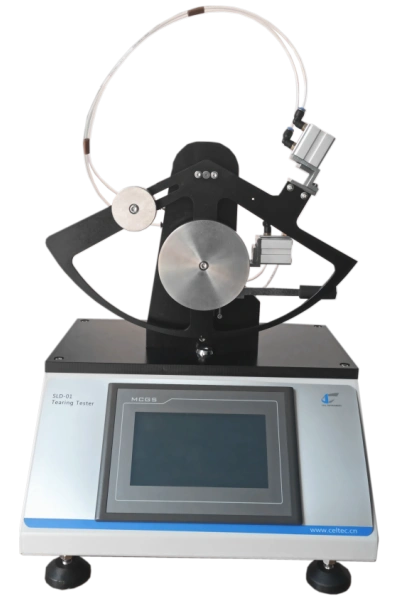
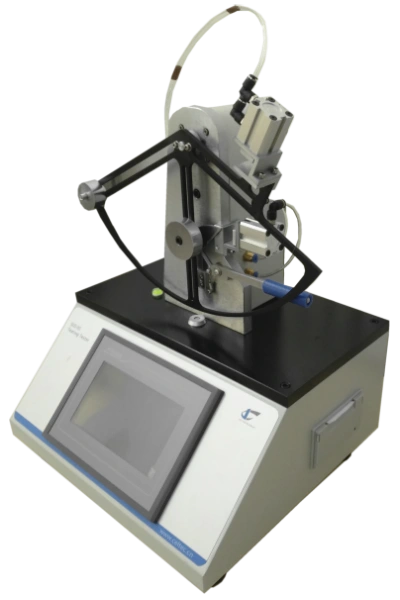
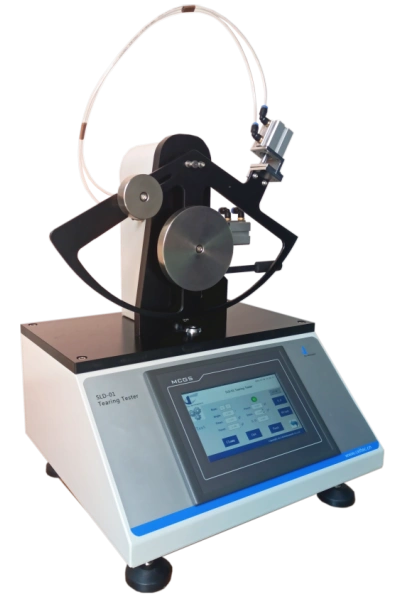
The elmendorf tear tester is a specialized instrument used to measure the force required to propagate an existing tear in materials such as plastic films, paper, paperboard, textiles, nonwoven fabrics, and flexible packaging structures. By quantifying material resistance to tearing, manufacturers can evaluate product durability, quality consistency, and fitness for end-use applications.
In industries where packaging integrity and material performance are critical, a reliable tear resistance test helps engineers understand how a material behaves when subjected to accidental cuts, punctures, or mechanical stress. The Elmendorf method has become one of the most widely accepted techniques for determining tear strength and is referenced by numerous international standards, including ASTM D1922, ASTM D689, ASTM D1424, ISO 6383-2, ISO 1974, and ISO 13937-1.
What Is the Elmendorf Method?
The elmendorf method measures the energy required to continue a tear that has already been initiated in a test specimen. The test is performed using a pendulum-based mechanism that tears the sample over a fixed distance.
When the pendulum is released, it travels through the specimen and loses energy as it propagates the tear. The amount of energy absorbed during the tearing process is directly related to the material’s tear resistance.
Compared with tensile testing, which measures force during stretching, the Elmendorf test focuses specifically on tear propagation behavior, making it particularly valuable for packaging and sheet materials.
Key Advantages of the Elmendorf Method
- Fast and standardized testing procedure
- Excellent repeatability and reproducibility
- Suitable for a wide range of flexible materials
- Widely recognized by international standards
- Ideal for quality control and product development
Why Is Tear Resistance Important?
A material may exhibit excellent tensile strength but still fail prematurely when exposed to localized damage. A small notch, cut, or puncture can rapidly develop into a catastrophic tear if the material lacks sufficient tear resistance.
Measuring tear strength of plastic film, paper, and fabrics helps manufacturers:
- Improve package durability
- Reduce transportation damage
- Optimize material selection
- Compare product formulations
- Verify compliance with customer specifications
- Maintain production consistency
For flexible packaging applications, tear resistance often determines whether a package survives handling, shipping, and consumer use.
Applications of Elmendorf Tear Testing
Flexible Packaging
Packaging engineers frequently perform tear testing on:
- Polyethylene (PE) films
- Polypropylene (PP) films
- PET films
- Laminated packaging films
- Barrier films
- Retort pouch materials
- Shrink films
- Stretch films
Testing the tear strength of plastic film helps determine resistance to damage during filling, sealing, transportation, and storage.
Paper and Paperboard
The paper tear test is commonly used for:
- Printing paper
- Packaging paper
- Kraft paper
- Tissue products
- Corrugated linerboard
- Specialty paper grades
Tear resistance is an important indicator of fiber bonding quality and paper durability.
Textiles and Nonwovens
The Elmendorf method is widely used for evaluating:
- Woven fabrics
- Nonwoven fabrics
- Industrial textiles
- Protective clothing materials
- Medical fabrics
- Geotextiles
Measurement of fabric tear strength helps ensure adequate performance in demanding applications.
How Does an Elmendorf Tear Tester Work?
An Elmendorf tear tester uses a calibrated pendulum to determine the energy absorbed during tear propagation.
Basic Test Procedure
- Prepare test specimens according to the applicable standard.
- Create a standardized pre-cut notch.
- Secure the specimen in the instrument clamps.
- Select the appropriate pendulum capacity.
- Release the pendulum automatically.
- The pendulum propagates the tear through a specified distance.
- The instrument calculates and displays tear resistance.
The resulting value represents the average force or energy required to continue the tear under controlled conditions.
Standards Supported by Elmendorf Tear Testing
Different industries use specific standards depending on material type.
| Standard | Material Type | Test Purpose |
|---|---|---|
| ASTM D1922 | Plastic film and sheeting | Tear propagation resistance |
| ASTM D689 | Paper and paperboard | Internal tearing resistance |
| ASTM D1424 | Textile fabrics | Fabric tear strength |
| ISO 6383-2 | Plastic films and sheets | Elmendorf tear resistance |
| ISO 1974 | Paper | Determination of tearing resistance |
| ISO 13937-1 | Textile fabrics | Tear properties using ballistic pendulum method |
These standards provide consistent procedures that enable reliable comparison across laboratories and production facilities.
SLD-01 Elmendorf Tear Tester
The SLD-01 Elmendorf Tear Tester from Cell Instruments is designed to deliver accurate, repeatable tear resistance measurements for packaging materials, paper products, textiles, and industrial sheet materials.
Technical Features
PLC Control with Touchscreen Interface
Industrial-grade PLC architecture provides reliable operation while the HMI touchscreen simplifies parameter setup, test execution, and result review.
Pneumatic Specimen Clamping
Uniform pneumatic clamping pressure minimizes operator influence and improves repeatability across multiple tests.
Automatic Pendulum Release
Automatic release ensures consistent test initiation and eliminates variability associated with manual operation.
Built-In Calibration Verification
Integrated calibration weights allow quick verification of multiple force ranges and help maintain measurement accuracy.
Data Management and Reporting
Available options include:
- Micro-printer for immediate result documentation
- RS-232 communication interface
- Professional software for advanced analysis
- Data export capability
- Statistical result processing
Paper Industry Functions
Optional paper-specific reporting supports:
- mN measurement units
- Tear index calculations
- Paper and pulp testing requirements
Technical Specifications
| Parameter | Specification |
|---|---|
| Pendulum Capacities | 200, 400, 800, 1600, 3200, 6400 gf |
| Gas Source | 0.6 MPa |
| Tearing Arm Length | 104 ± 1 mm |
| Initial Pendulum Angle | 27.5 ± 0.5° |
| Power Supply | AC 110–220V, 50/60Hz |
Choosing the Right Elmendorf Tear Tester
When selecting an elmendorf tear tester, consider the following factors:
- Applicable testing standards
- Material type and thickness range
- Required force capacity
- Data management requirements
- Calibration capabilities
- Automation level
- Regulatory compliance needs
A properly configured system ensures reliable measurements across a wide range of materials while supporting laboratory productivity and quality assurance objectives.