
The tear test of fabric is an essential evaluation used to measure the durability and strength of fabrics in various applications. Whether it’s for textile manufacturing, quality control, or material selection, understanding fabric tearing strength is crucial. In this article, we’ll cover the fabric tear strength test method, ASTM D751, and the trapezoidal tear strength test, helping professionals in the textile industry perform effective material testing and ensure the durability of fabrics.
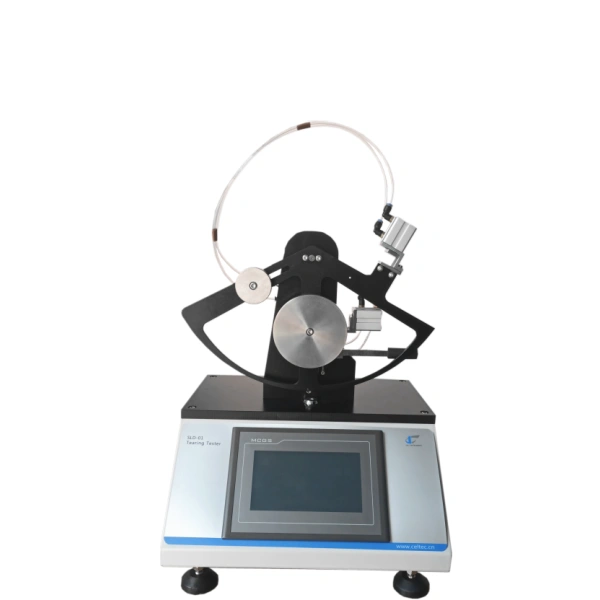
What is a Tear Test of Fabric?
The tear test of fabric involves determining the fabric’s resistance to tearing under specific conditions. This test is vital for evaluating how well a material can withstand physical stresses during use, particularly in industries such as clothing, upholstery, and industrial textiles. By assessing the fabric tearing strength, manufacturers can ensure that the materials used in their products will endure the rigors of daily wear and tear.
The tear strength can be measured using various methods, including ASTM D751 and the trapezoidal tear test. Each method provides different insights into the fabric’s resistance to tearing, and understanding the specific requirements for each test is essential for accurate results.
Fabric Tearing Strength: Key Testing Methods
One of the core aspects of the tear test of fabric is the measurement of fabric tearing strength. The tear strength refers to the force required to tear a fabric specimen under specified conditions. This is important for determining how well the fabric will hold up in real-world applications, such as in packaging, apparel, or industrial uses.
Here are some of the most common testing methods for fabric tearing strength:
ASTM D751: Standard Test Methods for Coated Fabrics
ASTM D751 outlines the standard test methods for coated fabrics, and it plays a significant role in determining tear strength. The test procedure involves the use of a grab test method, where a specimen of fabric is placed in a testing machine and subjected to force until it breaks. The test is carried out by pulling the fabric in a uniform direction to determine its breaking strength.
This method is typically used for coated fabrics, and the test results help manufacturers determine the durability of the fabric in harsh conditions. The fabric tearing strength measured by this method is critical for industries like automotive, marine, and outdoor gear, where fabric durability is paramount.
Trapezoidal Tear Strength Test
The trapezoidal tear strength test is another commonly used method for evaluating fabric tearing strength. In this test, a fabric specimen is cut into a rectangular shape, and an isosceles trapezoid is marked at the center of the fabric. A small cut is made along the base of the trapezoid. The fabric is then placed into the testing machine, and force is applied to tear the fabric along the trapezoidal cut.
This method is particularly useful for fabrics with high tensile strength, as it provides a more accurate measurement of tearing resistance. The results of the trapezoidal tear test offer insights into the fabric’s ability to resist tearing when subjected to high stress.
Importance of Tear Testing for Fabric Durability
Tear testing is crucial for assessing the fabric tearing strength, especially in applications where fabrics are subjected to constant abrasion, stretching, or tearing. The results of the tear test help manufacturers select the appropriate materials for specific applications, ensuring that the fabric meets the required durability standards.
In industries such as apparel, packaging, and upholstery, the ability of fabrics to resist tearing is critical for product performance. For example, in packaging, the tear resistance of the material ensures that it can withstand handling and transportation without compromising the integrity of the product inside.
Why Choose Cell Instruments for Fabric Tear Testing?
For accurate and reliable fabric testing, Cell Instruments offers a wide range of tear testers that comply with ASTM standards. Our tear testers are designed to provide precise measurements of fabric tearing strength, making them ideal for professionals in the textile and quality control industries.
Whether you need to perform a trapezoidal tear strength test or assess tear strength according to ASTM D751, our advanced testing solutions will help you obtain accurate and reproducible results.
Conclusion: Tear Testing and Fabric Durability
The tear test of fabric is an essential process for assessing fabric tearing strength, ensuring that materials meet the required durability standards for various applications. By utilizing standards like ASTM D751 and the trapezoidal tear strength test, manufacturers can make informed decisions about material selection and quality control.
At Cell Instruments, we are dedicated to providing high-quality testing instruments to help you accurately measure fabric strength and durability. If you need more information on tear testers or other testing solutions, contact us today.